How I automated Meta ads with Claude lol
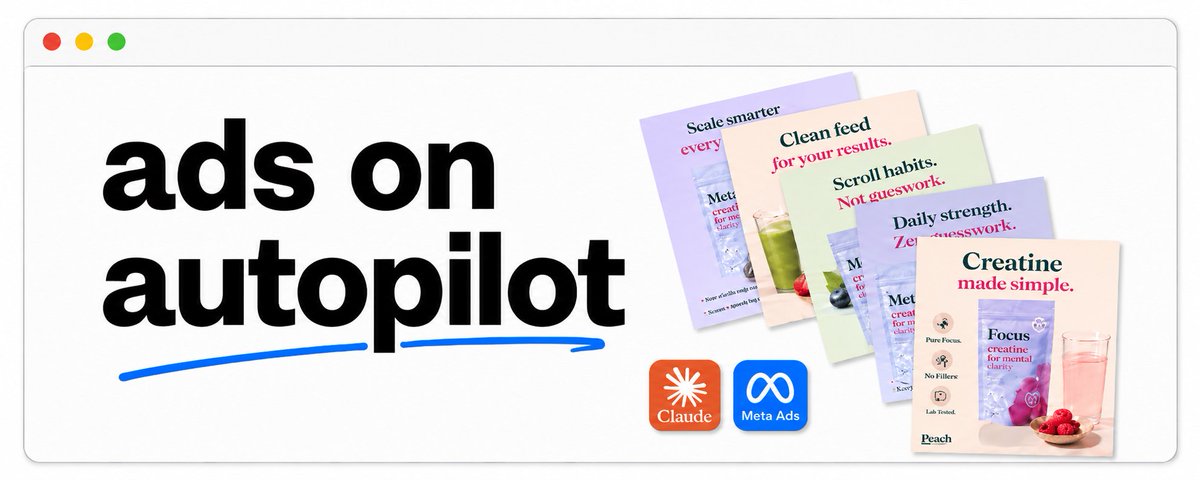
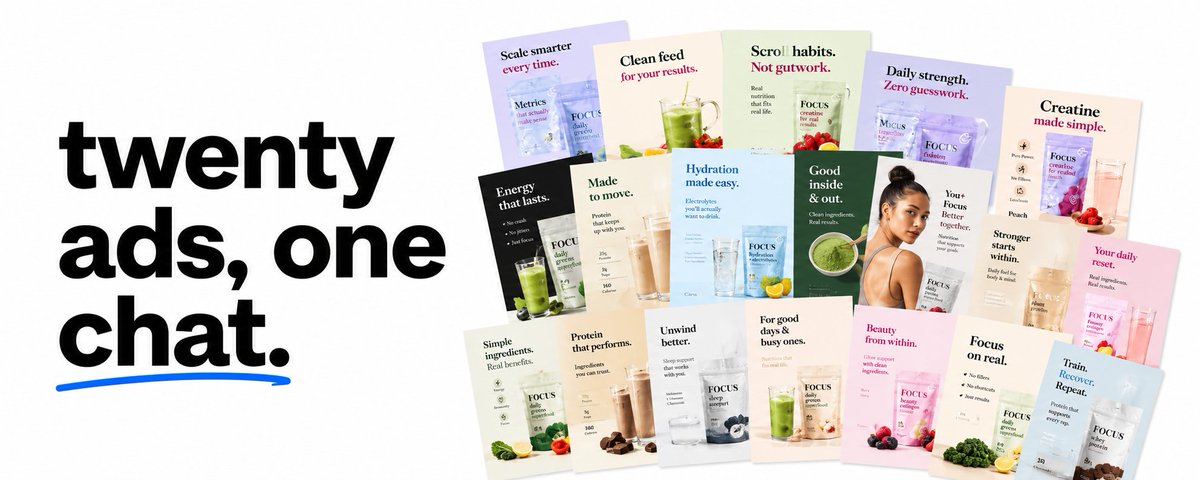
I opened claude this morning and told it to make me 20 ad concepts for a creatine gummy brand. twenty minutes later they were sitting live in the ad account, copy written, campaign structured, ready to run. I never left the chat.
[IMAGE — split screen, left side a single product photo on a plain background, right side a grid of 20 finished ad creatives, black and white ink illustration style, 5:2 aspect ratio]
why I even tried this
I opened my laptop and saw a post from higgsfield. how to run paid ads with an agent in 2026. a bullet list, a video walking through it, the kind of claim that gets thrown around constantly by accounts that just say outrageous stuff to farm views.
so I didn't believe it. I just tested it.
I gave the post straight to claude and said run this for me. no brand of my own to risk, so I picked bloom creatine gummies, a brand I don't work with and don't run ads for, purely to see if the claim held up under an actual test.
it held up.
the two connectors that actually made this possible
none of this works without two specific pieces plugged into claude. the first is higgsfield, which gives claude access to basically every top image and video model in one place. the second is the meta ads connector, and the story behind that one is worth knowing.
meta was supposed to acquire manus, which for a while was the only real way to connect an agent directly to an ad account. that deal got blocked in china. so meta just released their own connector straight into claude and chatgpt instead. add gpt image 2 into the mix, which is genuinely excellent at static ad creative, and you've got the three pieces that turned this from a nice idea into something that actually runs end to end.
setup takes about two minutes. open the connectors panel, add custom, paste in the url, sign in with your account. same process for both. no code, no api keys to manage yourself.
what I actually gave claude before it started
if you're running ads for your own brand, you'd hand claude your real brand guidelines, your product info, your ideal customer profile. I don't run ads for bloom, so I built that context from scratch in the same session.
I had claude write a one pager on creatine gummies so it understood the product. then I had it scrape bloom's actual branding straight off their website into json, using firecrawl, which is another connector worth having regardless of what you're building, since it lets claude actually pull structured content off a page instead of just reading a screenshot of it.
three files. a product photo, the scraped branding, and the one pager. that's the entire context folder. nothing complicated, nothing that took more than a few minutes to put together.
the actual prompt
here's exactly what I sent, word for word.
Example: "my brand is bloom creatine gummies. here's a document with all the info. find the best ads my competitors are running in meta ads library, and generate 20 static image ads using the higgsfield mcp, branded with the branding, using gpt image 2, based on what's working for my competitors."
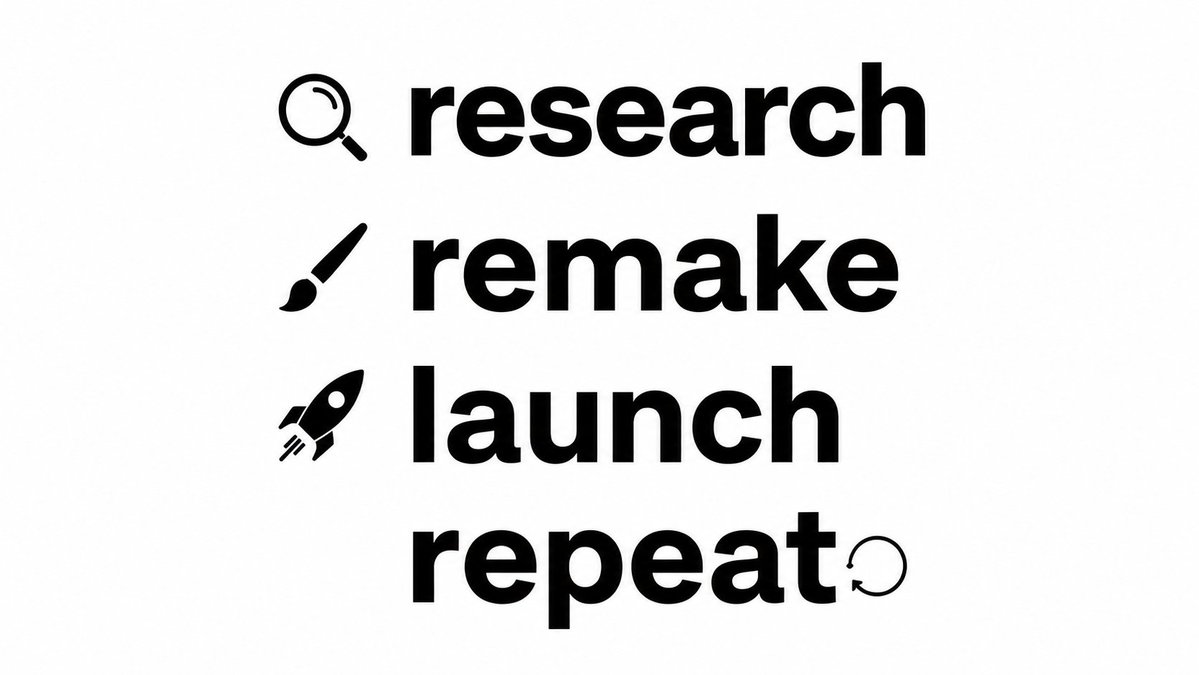
that was the whole instruction. claude went off, pulled competitor ads out of meta's own ad library, found the patterns that were actually working across them, synthesized ten of those patterns into twenty distinct concepts, and generated all twenty through higgsfield and gpt image 2.
[IMAGE — a simple flow diagram showing four steps in sequence, research competitor ads, synthesize patterns, generate concepts, write copy, minimalist line art style]
what came back
I went through all twenty. some of them genuinely surprised me.
the logos were accurate. the text on the packaging was accurate, right down to the tiny details most people wouldn't even check for. one ad hit the classic weight loss angle straight on, losing weight, you're losing muscle too, exactly the kind of pain point line a real media buyer would test first. another had a woman holding the tub saying she made this because she was sick of mixing chalky creatine for the girls, and it just worked, the kind of line you'd actually believe came from a real customer rather than a prompt.
not every single one landed. a couple had small tells, a hand that wasn't quite shaped right, a packet that looked slightly squished at the edge, the normal generation quirks you learn to spot after you've looked at enough of these. but the overall hit rate was high enough that it stopped being a curiosity and started being something I'd actually consider running.
and this is the part that matters more than any single ad looking good. it's a volume game. you're not trying to get twenty winners out of twenty attempts. you generate two hundred if you want, and you keep the best twenty. the cost of generating an extra hundred concepts is close to nothing compared to what a single day of shooting real product photography costs.
writing the copy and putting it live
once the twenty concepts existed, I asked claude to write primary text and headlines for every single one. it pulled the competitor research it had already done and wrote copy that matched each specific creative, not generic copy pasted across all twenty.
then one more instruction. set this campaign up in meta ads with these static ads, primary text, and headlines.
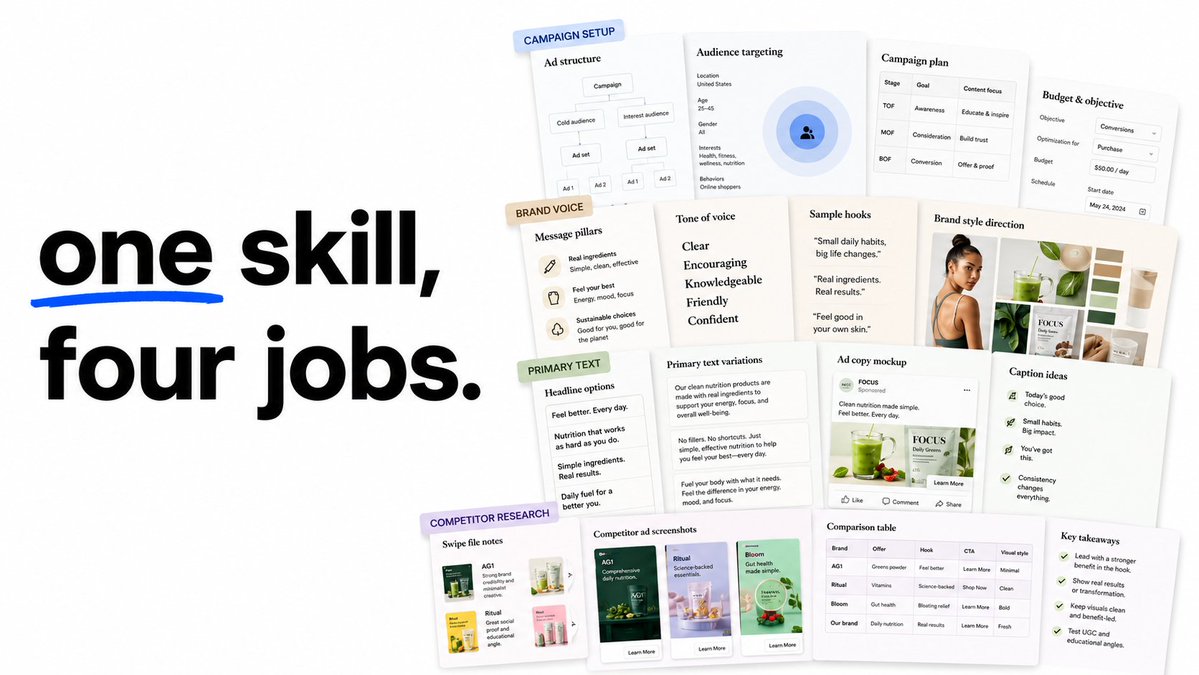
it hit a small snag, an old ad account without a payment method attached, so there was a bit of back and forth while it tried a few accounts before landing on the right one. once the payment method was added, it went straight through. campaign created, ad sets built, ads grouped by angle, creatives and copy attached to each one. I opened meta ads manager after and the whole thing was just sitting there.
scheduling it to run itself
last step. schedule this workflow to run every monday to create and launch new ads.
claude asked one clarifying question, whether it should just keep pulling fresh competitor research each time, and then that was it. every monday now, a new batch of twenty ads gets generated and dropped into the ad account, paused by default so nothing goes live without a human approving it first.
I don't run ads for bloom. so right now this is just sitting there, quietly generating a new batch every week, proving the point rather than making anyone money.
why this isn't actually finished yet
I want to be straight about something. this workflow, as it stands, is primitive. I didn't teach claude any real media buying strategy. I told it to scrape competitor ads, remake them for the brand, and launch them. that's it. there's no defined campaign structure behind it, claude just made one up on the spot, and if you've actually run paid ads before, you know that matters a lot more than the creative does.
a workflow that generates good looking ads with no strategy behind the account structure will only get you so far. that's not a knock on the tools, it's just the honest state of what a first pass looks like.
the fix, and why it matters more than the ads themselves
this is the part that actually turns a fun test into something production ready, and it's the same lesson underneath everything I build.
right now claude made up its own campaign structure because nobody taught it one. so the fix is teaching it. if you're a media buyer, or you work with one, you sit down and explain how you actually structure accounts, one campaign for scaling, one for testing, a winning ad set inside there, a separate ad set per angle, whatever your actual system is. then you turn that explanation into a skill, something like campaign setup.
do the same thing for the parts that matter. a brand voice skill so every batch of copy sounds consistent. a brand guidelines skill so the visuals never drift off brand. a primary text skill that captures exactly how you like ad copy written, not generic, your actual preferences.
then you build one skill that sits above all of them, something like new ad batch, and inside that skill you just tell claude to use the campaign setup skill, then the brand voice skill, then the primary text skill, then the competitor research step, in that order, every single time. that's an orchestrator skill. it's the same pattern I use for a lot of what I build, one skill that just calls the others in sequence so the whole process runs the same way every time instead of depending on me remembering to explain it correctly each session.
take it one step further and you can add a skill that reports back weekly on how the ads actually performed, and another that checks every ad against your real numbers and kills anything underperforming after a set number of days, automatically, without you opening the ads manager at all. at that point you haven't just automated ad creative. you've automated the entire loop, creation, launch, monitoring, and cleanup, and none of it needs you in the room.
[IMAGE — a simple hierarchy diagram, one box labeled orchestrator skill at the top with arrows pointing down to four smaller boxes labeled campaign setup, brand voice, primary text, competitor research, clean minimalist style]
this isn't a theory. I've already got this exact pattern running on the analysis side. I have a skill called ads analyst, and it's an orchestrator too, except instead of creating ads it reads them. I run it, and it knows to pull in a meta ads extractor skill first, then a meta ads analyzer skill, then a creative analysis skill, one after another, no input needed from me beyond kicking it off. one skill quietly running three others in sequence. the ad creation side just needs the same treatment.
how you actually build the skill in the first place
you don't sit down and write a skill file by hand. there's a skill for that too, literally called the skill creator skill, and it's the thing that does the writing for you.
there's two ways to use it. you can open a fresh chat and say straight up, help me build a skill for writing primary text, and it'll walk you through questions until it's got what it needs. or, and this is the way I'd actually recommend for something like campaign setup, you go through the process manually first. sit with claude, build out one real campaign the way you actually want it structured, correct it as you go, get it exactly right. then, once you're happy, say build a skill for what we just did.
claude already has the full context of everything that just happened between you, so the skill it writes actually reflects your real preferences instead of a guess. that's the difference between a skill that needs correcting every third use and one you never have to think about again.
what this actually proves
twenty ads, written and launched, without me leaving a single chat window, in about twenty minutes. that part's real and it's repeatable, I watched it happen and now it runs every monday whether I'm paying attention or not.
what it isn't, yet, is a finished media buying system. the gap between those two things is exactly where the actual skill building happens, and it's a lot smaller than it looks from the outside once you know what to actually teach it.
if you're running ads for your own brand and spending more time in ads manager than you'd like, this is worth stealing. the connectors are free to set up. the only real cost is the twenty minutes it takes to try it.
p.s. if you want to see what this looks like built specifically for your own offer and account structure, the AI course is where I hand over my entire setup, every tool, every skill, made yours. reserve your seat here →
awr-gamut-exploration.vercel.app/self-paced#reserve
remy
Links
Related articles

how i write KILLER ad copy with sonnet 5 + meta MCP
most people write ad copy by staring at a blank screen and guessing what might work.
How to Build a Zero-Headcount Revenue Team in Claude Code
A revenue team does six jobs. Hire for all six and it's six people and six salaries.

The $1,000/hour Solo AI business (Full Course)
The AI business you can start this week with no audience, no capital, and no code