I Built a Brand With Claude Design and It Makes $8,400 a Month
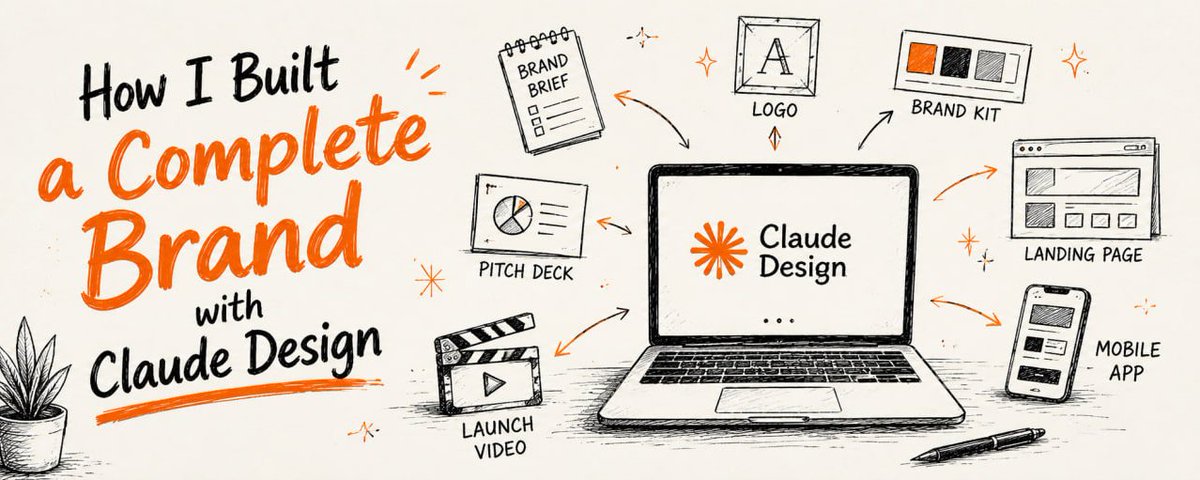
A few weeks ago, I decided to see how far I could push Claude Design on a real project
At first, I thought I'd spend a few hours testing features, build a quick landing page, and move on
That didn't happen
Instead, I ended up creating an entire brand from scratch
Logo
Brand identity
Landing page
Pitch deck
Mobile app prototype
Marketing assets
What surprised me most wasn't the quality
It was how quickly the costs started adding up when I used the tool incorrectly
After several days of testing, rebuilding and experimenting with different workflows, I realized most people will waste a huge amount of usage before they discover what Claude Design is actually good at
So in this article, I'm going to walk through the exact process I used, the mistakes that cost me the most time, and the workflow I'd recommend if you're starting today
What Claude Design Actually Is
Most people hear the name and assume it's another AI image generator
That's not really accurate
Claude Design feels more like a visual production environment than a traditional design tool
You describe what you want in natural language, and it creates complete visual assets around that request
Landing pages
Presentations
Product mockups
Brand systems
Mobile interfaces
Marketing creatives


Even animated content
The interesting part is that Claude doesn't simply generate an output and stop there
It continuously evaluates what it creates, checks for inconsistencies, and often fixes problems before you even notice them
That feedback loop is one of the biggest reasons the final results feel much more polished than most AI-generated designs
The Biggest Mistake I Made
When I first started, I treated Claude Design like a brainstorming tool
That was expensive
I would open a new project, ask for ideas, change directions halfway through, regenerate layouts, and experiment with completely different concepts
The result was predictable
I spent a lot of usage generating work that never made it into the final product
Eventually I realized something important
Claude Design performs best when the thinking is already done
Today my workflow is completely different
I brainstorm outside Claude Design
I define the positioning
I define the audience
I decide on the visual direction
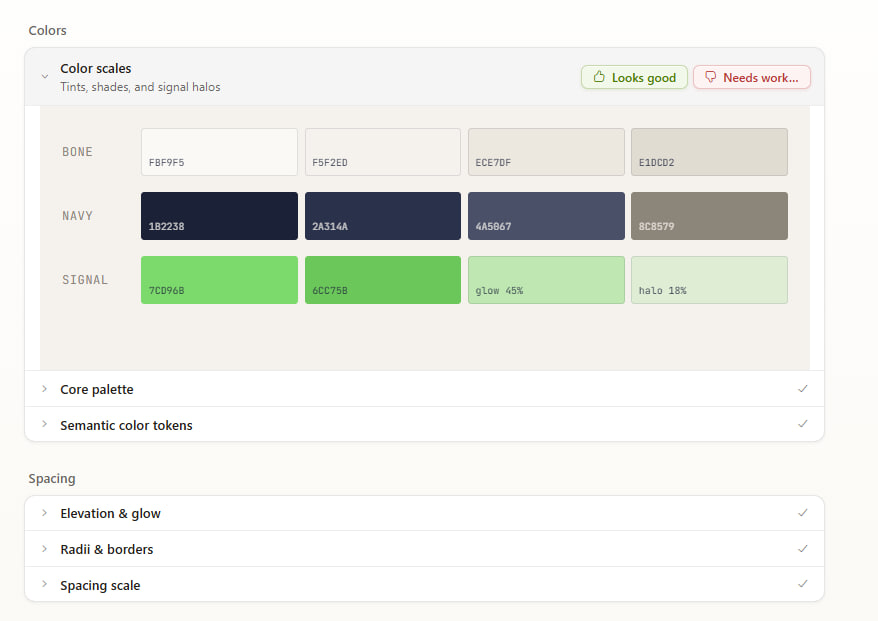
I choose colors
Only after everything is documented do I move into the design phase
The difference in efficiency is massive
Build The Design System First
If there's one lesson worth remembering, start with a design system:
Not a landing page
Not a presentation
Not an app mockup
A proper design system becomes the foundation for everything else


Colors
Typography
Spacing
Buttons
Cards
Inputs
Icons
Component behavior
Visual hierarchy
Once those decisions are made, every future asset becomes easier to create
For my project, I provided Claude Design with a simple brand brief containing the mission, audience, visual references, color preferences, and overall style direction
The first version wasn't perfect
Some elements felt inconsistent
A few components looked slightly off-brand
But after a couple rounds of feedback, the system became surprisingly solid
From that point onward, everything I created shared the same visual language
That's where the real value started appearing
My Brand Creation Workflow
Once the design system was finished, I followed the same process across every asset
Step 1: Create The Brand Foundation
Before designing anything, I wrote a detailed document explaining:
Who the product was for
What problem it solved
How it should feel
What kind of audience it should attract
This became the source of truth for every future decision


Step 2: Generate The Design System
Using the brand brief, Claude Design created the visual framework
Typography hierarchy
Primary and secondary colors
Components
Spacing rules
Interaction patterns
Everything started from here
Step 3: Build The Pitch Deck
With the design system already established, creating a presentation became much easier
Instead of designing every slide individually, I simply focused on the story
The visual consistency was already handled
The final result looked significantly more professional than anything I could have assembled manually in the same amount of time
Step 4: Create The Landing Page
The landing page was where everything started coming together
Hero section
Feature breakdowns
Comparison tables
Testimonials
Call-to-action sections
Because the visual language already existed, the page felt cohesive almost immediately
Instead of designing from scratch, I was assembling pieces from an existing system
Step 5: Build Mobile Screens
Next came the mobile experience
Rather than creating wireframes first, I moved directly into higher-fidelity screens
This saved a surprising amount of time

The design system already contained most of the building blocks needed for the interface
Step 6: Create Marketing Assets
Finally, I used the same brand framework to generate promotional materials
Social media graphics
Product visuals
Launch assets
Presentation graphics
Everything matched because everything originated from the same source
That consistency is difficult to achieve when you're jumping between multiple tools and disconnected workflows
The Hidden Superpower
Most people only interact with Claude Design through prompts
That's actually one of the slowest ways to work
The real advantage comes from making small adjustments directly inside the project
Changing text
Adjusting spacing
Refining layouts
Updating colors
Making targeted improvements instead of regenerating entire sections
Every unnecessary generation costs time and usage
Every direct edit saves both
Over time, those small savings become significant
How To Save Credits
After spending far more than I intended, I eventually developed a simple set of rules
Brainstorm outside Claude Design
Create a detailed brief before generating anything
Use references whenever possible
Describe exactly what you want
Describe what you don't want
Avoid making multiple major requests in a single prompt
Review outputs early instead of letting long generations continue unchecked
Most importantly, make decisions before opening the project
Indecision is one of the fastest ways to burn through usage
Publishing The Final Product
Creating designs is only half the process
Eventually, everything needs to go live
After finalizing the visual assets, I moved them into development and deployment
This was where the design system became even more valuable
Instead of handing over dozens of disconnected files, I had a unified visual language that could be applied consistently across the final product
The transition from concept to live website became significantly smoother than I expected
Final Thoughts
Claude Design didn't replace designers
It didn't magically eliminate creative work
What it did was dramatically reduce the distance between an idea and a finished product
The workflow that worked best for me was surprisingly simple
Plan first
Design second
Build third
The people getting the most value from Claude Design aren't treating it like a chatbot
They're treating it like a specialized tool with a specific role inside a larger creative process
Once I started approaching it that way, everything became faster, cheaper, and far more consistent
And that's when I finally understood why so many people are excited about it
@insomnia_vip Embedded post:
Author: Claude (@claudeai) Post ID: 2045156267690213649 Source: https://x.com/claudeai/status/2045156267690213649 Reply to: none
Text:
> Introducing Claude Design by Anthropic Labs: make prototypes, slides, and one-pagers by talking to Claude. > > Powered by Claude Opus 4.7, our most capable vision model. Available in research preview on the Pro, Max, Team, and Enterprise plans, rolling out throughout the day.
Media:
- video: /media/posts/i-built-a-brand-with-claude-design-and-it-makes-8-400-a-month/1.mp4
Related articles

How I'd make $10 million with AI agents
Two markets worth trillions are opening at the same time. I've been through 3 platform shifts living in Silicon Valley building/selling VC-backed companies and I've NEVER seen this.

I Built 40 Apps With Claude Code and Now Make $36,000/Month. (Exact playbook)
No coding degree. No team. No VC funding. Just Claude Code, a keyword research tool, and a repeatable system I run from my laptop.

my ULTIMATE claude code setup (after months of daily use)
I've been using this setup every single day for months. never showed anyone the full thing until now. here's exactly what it is.