The End of Prompting: The Beginning of AI Loops

Most people are still trying to find the perfect prompt.
That is the wrong game now.
The best AI users are not getting better because they found a magic sentence. They are getting better because they stopped treating AI like a chat box and started treating it like a system that can carry work from one step to the next.
This is the shift: prompting was about getting one good answer. Loops are about making the work keep moving after the first answer.
PART 1 · The prompt era is running out of road
Everyone is still trying to collect better prompts, which is the lowest-leverage way to use AI now. They keep hunting for the perfect sentence, the perfect roleplay, the perfect "act as" setup, then wonder why every serious task still turns into babysitting a chat tab for forty minutes.
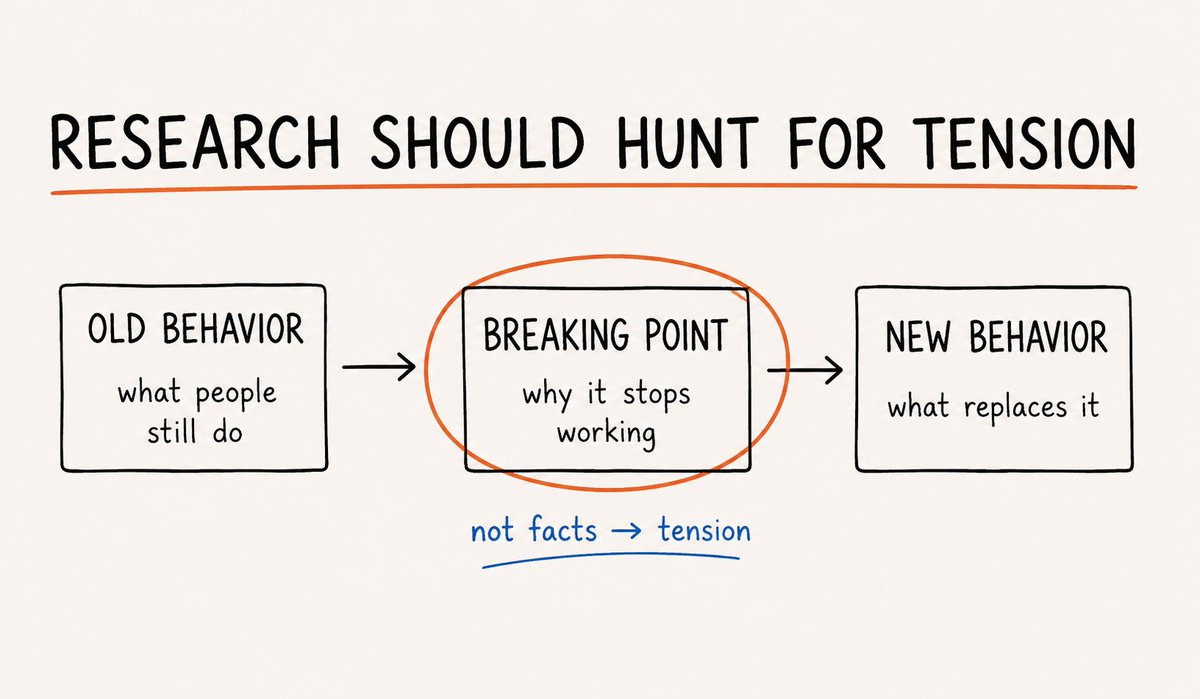
The old AI workflow looks like this:
Open chat → paste context → ask once → fix output → ask again → start over
It feels productive because something is happening.

It is still manual work with a faster autocomplete.
The problem is not that the prompts are bad. The problem is that a prompt is usually only one move, while real work is a chain of moves.Research becomes outlining, outlining becomes drafting, drafting becomes checking, checking becomes rewriting, rewriting becomes publishing, and then the result should teach the next attempt. Most people force themselves to manually push every step, then call it “AI workflow.”
That is not a workflow. That is clicking "continue" on a machine that should already know what comes next.
You are not answering my task directly. You are turning this task into a repeatable AI loop.
The task is: [TASK]
Design the loop like a system. Explain what context the AI needs before it starts, what it should produce first, how the output should be judged, what should happen if the output is weak, what should be saved for the next run, and when the loop should stop. Keep it simple enough that I can run it every day without rebuilding the whole setup.
PART 2 · Karpathy pointed at the real shift
Karpathy’s Software 3.0 idea made people repeat the easy line: English is becoming a programming language. That part is true, but it is not the full unlock. If English can program a model, then English can also program a process around the model.
That is where most people missed it. They used natural language to ask for outputs, not to design systems. Vibe coding was the messy first version: describe what you want, let the AI write code, run it, complain when it breaks, repeat until something works. Looping is the cleaner version of the same instinct: give the AI a goal, give it tools, give it a check, let it make progress, and make sure it knows when to stop.
"The hottest new programming language is English."

by Andrej Karpathy
But English as a programming language does not mean you should write longer prompts. It means you should start describing the whole machine: what it reads, what it does, how it checks itself, what it remembers, and what it is not allowed to touch.
PART 3 · The loop is the product
A useful loop is not some giant multi-agent fantasy. It is usually boring in the best possible way. The AI gets a goal, pulls the right context, takes an action, checks the result against a standard, stores what worked, and repeats only if the result is not good enough yet.
That one change turns AI from a text generator into a worker. Not a perfect worker, not an autonomous god, not some "fire your team" nonsense. Just a worker with a process, a checklist, and a manager watching the risky parts.
This shift is already visible in:
Karpathy → Software 3.0
Anthropic → agent workflows
Meta/Llama → tools, evals, deployment control
This is why Anthropic's agent patterns matter. The best agent systems are not built by throwing ten bots into a Discord and hoping something intelligent happens. They are built from simple pieces: routing, tools, prompt chains, evaluator loops, and orchestrator-worker setups. The magic is not the model acting smart once. The magic is the model being forced through a process that catches weak work before you see it.
Meta’s Llama ecosystem points in the same direction from the other side. Open models, safety layers, evals, local deployment, cheaper routing, different models for different jobs. The future is not one giant model answering everything. The future is systems where cheap models sort, strong models reason, local models handle private context, and evaluator passes decide what survives.
PART 4 · The writing loop
Most AI writing is bad because people ask for a finished article too early. They skip the part where the idea gets pressure-tested, the hook gets scored, the weak sections get attacked, and the proof gets checked.
A real writing loop does not begin with "write me a post." It begins with angle selection. Then it tests the angle against curiosity, specificity, proof, and emotional tension. Then it drafts. Then it judges the draft. Then it rewrites. Only after that should you read it.
A real writing loop has layers:
Angle → Hook → Draft → Critique → Rewrite → Image ideas → Next test
Most people only ask for the draft.
That is why the draft sounds like everyone else’s.
Start by creating five possible angles for the article. Score each angle for curiosity, specificity, usefulness, and how likely it is to make someone click. Choose the strongest angle and explain why it wins.
Then write the first draft. After the draft, become the evaluator and attack it for generic claims, weak proof, boring transitions, unclear payoff, and sections that sound like AI. Rewrite the article using that critique. At the end, give me the final draft, the strongest hook, the weakest remaining section, and three image ideas that would make the article feel more credible.
PART 5 · The research loop
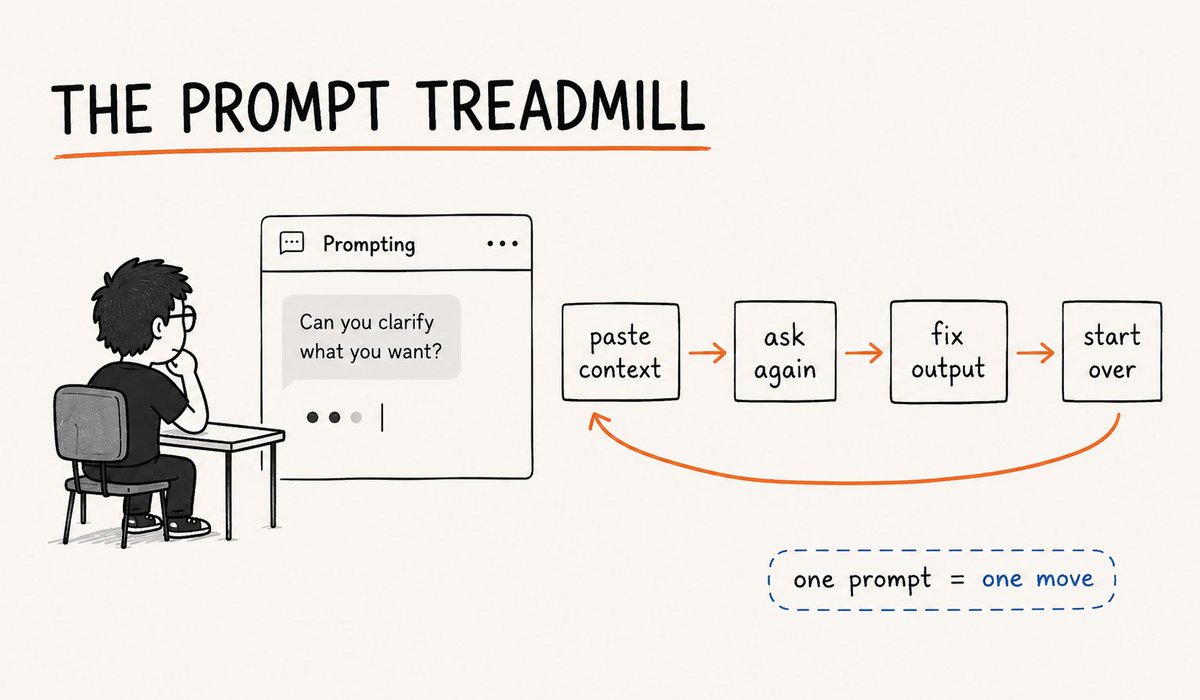
The same thing applies to research. Most people ask AI to "research a topic," then get a mushy summary that sounds like every blog post on page two of Google. A research loop should not collect facts randomly. It should hunt for tension.
The strongest articles in this niche all do the same thing: they find an old behavior, show why it is now broken, introduce a new category, then give the reader a system they can steal. That is why "Loop Engineering" hits harder than "10 Claude prompts." One sounds like a new operating model. The other sounds like a PDF lead magnet.
PART 6 · The memory loop
The part almost nobody builds is memory. Without memory, every AI workflow has amnesia. It can help you today, but tomorrow it starts again like an intern on day one.
A memory loop changes that. After every project, the AI should extract what worked, what failed, what style performed, which examples were strongest, which claims felt weak, and what should be reused next time. This is how the system starts compounding.
Your second brain is useless if it only stores notes. The real unlock is when it maintains itself, finds repeated ideas, notices unfinished thoughts, and pushes the right context back into the next task before you even ask.
After this task is finished, extract the reusable lesson from the work.
Save what the task was, what approach worked, what sounded generic, what examples were useful, what should be reused next time, and what mistake I should avoid repeating. Before starting the next related task, check this memory first and tell me if I am about to repeat an old mistake or miss a pattern that already worked.
PART 7 · The real skill now

Prompting was the beginner interface. It taught people that language can control models, but it also trained them to think too small. They still imagine AI as a box that answers, when the real opportunity is building systems that move work forward.
The next edge is knowing which tasks deserve loops. Not everything needs one. A quick question can stay a quick question. But anything you do every day, every week, or every time you publish, sell, code, research, trade, edit, or organize knowledge should probably not live inside a single chat.
That work needs a loop.
A loop does not make the human useless. It moves the human to the part that actually matters: setting the goal, defining the taste, approving the risky decisions, and improving the system after each run.
The people still collecting prompt lists are optimizing the sentence.
The people building loops are optimizing the machine.
Prompts
You are my writing loop.

Topic:
[INSERT TOPIC]

Audience:
[INSERT AUDIENCE]

Style:
[INSERT STYLE]

Goal:
[INSERT GOAL]

Do not write the article immediately.

First, create 5 possible angles for this topic.

For each angle, judge:
- how clickable it is
- how specific it is
- how useful it is
- how different it feels from generic AI content

Pick the strongest angle and explain why it wins.

Then write the first draft.

After the draft, switch into editor mode and critique it for:
- weak opening
- generic claims
- missing proof
- boring transitions
- unclear payoff
- sections that sound like AI

Then rewrite the article using that critique.

At the end, give me:
1. final article
2. strongest hook
3. weakest remaining section
4. 3 image ideas
5. what I should test in the next version
Research this topic like I am writing a high-performing X Article, not an SEO blog post.

Topic:
[INSERT TOPIC]

Do not give me a generic summary.

Find the tension behind the topic.

I want to know:
- what old behavior people are still doing
- what new behavior is replacing it
- why the old behavior is breaking
- what proof or examples show the shift is real
- what contrarian angle would make people stop scrolling
- what claims sound overhyped and should be avoided

Then turn it into a creator brief with:
- title
- thesis
- opening hook
- article structure
- strongest examples
- image ideas
- what the reader should walk away believing
After this task is finished, extract the reusable lesson from the work.
Save the following:
What the task was.
What approach worked.
What sounded generic.
What examples were strongest.
What structure worked best.
What should be reused next time.
What mistake should not be repeated.
Before starting the next related task, check this memory first.
If I am repeating an old mistake, call it out.
If an old pattern applies, reuse it.
If important context is missing, ask for it before producing the final answer.You are not here to answer my task directly.
You are here to turn it into a repeatable AI loop.
Task:
[INSERT TASK]
First, break the task into the steps that normally happen manually.
Then design a loop that can run those steps with minimal human babysitting.
The loop must include:
- what context the AI needs before it starts
- what it should produce first
- how the output should be checked
- what happens if the output is weak
- what gets saved for the next run
- when the loop should stop
- what still needs human approval
Keep the system simple enough that I could run it every day.Related articles

How to Generate 25 Websites in One Hour Using Claude Fable 5 + Loop Engineering
Learn how to automate website creation with Claude Fable 5 using Loop Engineering This guide covers the workflow, architecture, and code needed to generate and deploy dozens of websites with minimal…

my ULTIMATE claude code setup (after months of daily use)
I've been using this setup every single day for months. never showed anyone the full thing until now. here's exactly what it is.

The AI skill of 2026 that almost nobody is teaching
I have spent two years building things on top of models I cannot see inside. Every fix I know how to make touches one of two places. I change what goes in, or I grade what comes out. The prompt, the…