THE GMKTEC EVO-X2 CAN RUN CLAUDE CODE WITHOUT THE INTERNET. $1,800 ONCE, $0 A MONTH.

One mini PC. One install. Claude Code pointed at your living room instead of Anthropic's servers.
If you're paying $200 a month for Claude Code Max and another $200 for ChatGPT Pro, you're spending close to $5,000 a year on AI. That math used to make sense. Nothing on a desk could touch what the cloud offered.
That just changed.
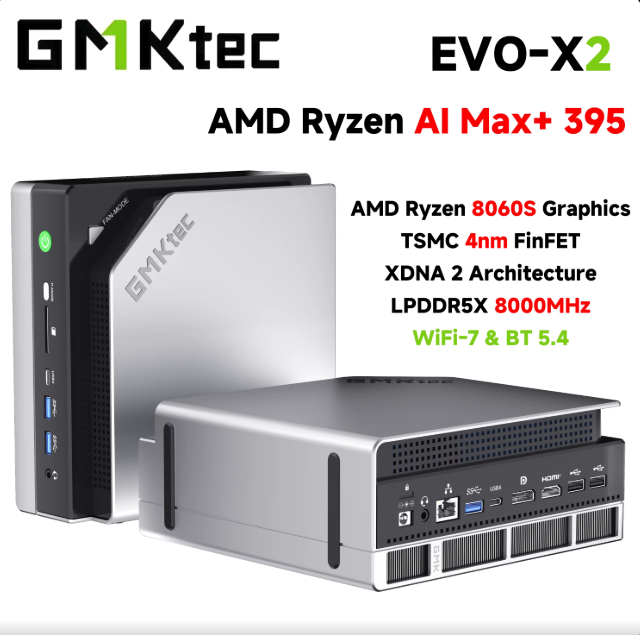
The GMKtec EVO-X2 is a mini PC the size of a hardcover book. It costs $1,800. It runs models up to 200 billion parameters locally, and you can wire it to Claude Code so the CLI sends every request to your box instead of Anthropic. Same interface, same agent loop, nothing leaving your network, nothing on the meter.
Here's exactly how the setup works and what you need to copy it.
The box
The EVO-X2 looks like nothing. Black, sits on a shelf, costs less than most gaming laptops. What's inside is what changed the math.
┌────────────────────────┬──────────────────────────┐
│ Spec                   │ GMKtec EVO-X2             │
├────────────────────────┼──────────────────────────┤
│ Chip                   │ AMD Ryzen AI Max+ 395     │
│ Cores / Threads        │ 16 / 32                   │
│ Max clock              │ 5.1 GHz                   │
│ GPU                    │ 40 RDNA 3.5 CUs           │
│ NPU                    │ 50 TOPS                   │
│ Unified memory         │ 128GB LPDDR5X             │
│ Usable as VRAM (Linux) │ up to 110GB               │
│ Peak power             │ ~140W                     │
│ Price                  │ $1,700 - $2,000           │
└────────────────────────┴──────────────────────────┘
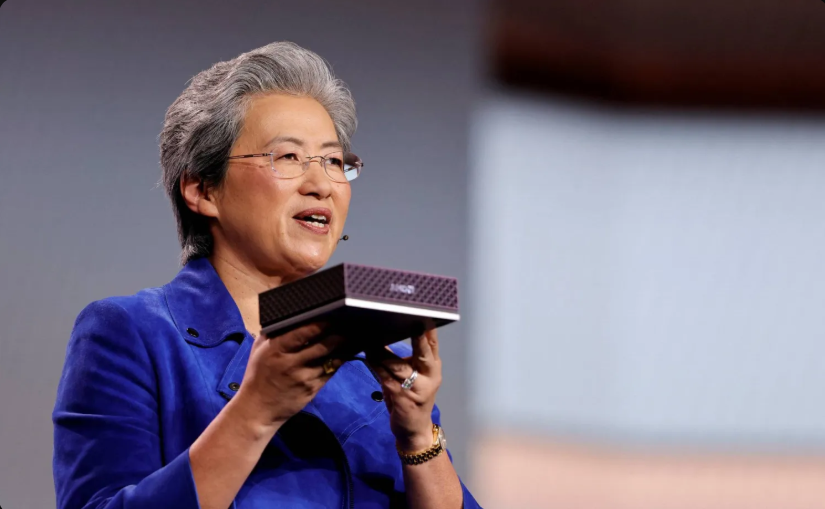
The chip is AMD's Strix Halo, sold as Ryzen AI Max+ 395. First x86 chip ever that can fit a 200-billion parameter model on a single piece of silicon. Lisa Su walked onto the CES 2026 keynote stage with one of these and later signed a unit with her name. CEOs don't sign hardware unless something has changed.
What changed: unified memory. Instead of a separate GPU with its own small pool of VRAM, the CPU and GPU share one 128GB pool. The model loads once. Both chips read from the same address space. Apple Silicon does the same thing and it's the reason Macs punch above their weight on local AI.
The difference here is the EVO-X2 runs Linux properly, which means Ollama, llama.cpp, vLLM, and the rest of the open-source AI stack runs without fighting you.
What it can actually run
Published benchmarks and community testing on the AMD AI Max platform show roughly the following for a Q4-quantized stack on Linux:
┌──────────────────────┬────────────┬───────────────────────────┐
│ Model                │ Size       │ Approx. speed              │
├──────────────────────┼────────────┼───────────────────────────┤
│ Qwen3-Coder 30B      │ ~18GB      │ ~40-50 tok/s               │
│ Llama 3.3 70B        │ ~42GB      │ ~20-25 tok/s               │
│ DeepSeek-V3          │ ~95GB      │ ~10-12 tok/s               │
│ Qwen3-235B           │ ~110GB     │ ~6-8 tok/s                 │
└──────────────────────┴────────────┴───────────────────────────┘
The two that matter for replacing Claude Code Max are Qwen3-Coder 30B and Llama 3.3 70B. Both are completely usable for development work. Both fit in memory with room for long context windows. Neither costs anything per token after the box is paid off.
The bigger models are there when you need them. Qwen3-235B sits in the same ballpark as Claude Sonnet on a lot of benchmarks. Yes, slower. Yes, worth it for the queries where speed isn't the bottleneck.

Setup, end to end
Plan an evening. Most of it is downloads.
Step 1. Wipe Windows.
The EVO-X2 ships with Windows 11. Windows caps your usable VRAM at 96GB. Linux unlocks 110GB. No reason to keep Windows on a box you bought for AI. Boot from a Ubuntu 24.04 USB, format the drive, install.
Step 2. Install Ollama.
curl -fsSL https://ollama.com/install.sh | shThat's it for the engine. Ollama handles model loading, memory, and the API endpoint. No config files. No GPU driver wrestling. The AMD support is solid now.
Step 3. Pull a model.
ollama pull qwen3-coder:30bWait fifteen minutes for the download. The model lands at ~18GB and stays on disk.
Step 4. Test it.
ollama run qwen3-coder:30b "write a python function that downloads a file with progress"If you got a response, you're past the hard part.
Step 5. Install Open WebUI (optional but recommended).
docker run -d -p 3000:8080 \
  -e OLLAMA_BASE_URL=http://localhost:11434 \
  -v open-webui:/app/backend/data \
  --name open-webui ghcr.io/open-webui/open-webui:main
Now you have a ChatGPT-style interface at http://evo.local:3000 reachable from any device on your network. Phone, laptop, tablet, all hitting your box.
Step 6. Point Claude Code at the local endpoint.
This is the move that actually replaces the subscription.
export ANTHROPIC_BASE_URL=http://evo.local:11434
export ANTHROPIC_API_KEY=ollama
Now Claude Code, the CLI tool, sends every request to your EVO-X2 instead of Anthropic. Same commands. Same agent loop. Nothing leaves your network.
Total time start to finish: around ninety minutes if you've never touched Linux. Forty-five if you have.
The money
What this single box replaces, line by line.
┌────────────────────────────┬──────────────┬──────────────┐
│ Subscription               │ Monthly cost │ Annual cost  │
├────────────────────────────┼──────────────┼──────────────┤
│ Claude Code Max (20x)      │ $200         │ $2,400       │
│ ChatGPT Pro                │ $200         │ $2,400       │
│ Cursor Pro                 │ $20          │ $240         │
├────────────────────────────┼──────────────┼──────────────┤
│ Total                      │ $420         │ $5,040       │
└────────────────────────────┴──────────────┴──────────────┘
The box is $1,800. Electricity sits around $9 a month running 24/7.
Break-even hits at month five. After that, every month is money that used to leave your account and now stays. Three-year math is roughly $13,000 not paid to AI companies.
The real shift isn't the savings. It's the behavior change. When you stop paying per token, you stop rationing your usage. You run agents overnight on tasks you'd never have started when the meter was running. Full-codebase audits. Document processing across hundreds of files. Refactor experiments you would've talked yourself out of trying. Local inference is free at the margin and that flips how you use it.
What you can actually do with it
Coding is the obvious first one. Claude Code points at the local Qwen3-Coder 30B. You write code the same way you did with Anthropic's models. The 30B is noticeably worse than Claude Sonnet on really hard problems. It's better than nothing, and the marginal cost is zero. For 90% of the code you write daily, the trade is fine.
Agents that run for hours. This is where the math really breaks open. Build a research agent that scrapes specific accounts, summarizes new posts, drops a daily digest in Telegram. On the Anthropic API that's $15-20 a day in tokens. On the EVO-X2 it runs in the background and you forget it exists.
RAG over private documents. The box has more than enough headroom to keep an embedding model warm alongside the chat model. Drop your notes, chat history, work docs into a vector DB. Search by meaning instead of keywords. Nothing leaves the box.
Bulk transcription and summarization. Whisper runs on the same hardware. Drop a folder of voice notes or recordings in, get transcripts out. The cloud version costs real money per minute. The local version costs electricity.
Quick experiments that used to feel expensive. Want to test if a fine-tuned classifier works better than a prompt? Try it. Want to run an LLM judge over 10,000 examples? Run it. The cost is electricity and time, not dollars per token, and that changes the kinds of experiments you bother with.
What it can't do
Two things this box doesn't replace.
The first is frontier reasoning. Claude Opus 4.7 and GPT-5 are still ahead of anything you can run at home when you genuinely need a model to think hard. For the hardest 5% of problems you'll still hit the cloud. You'll just do it through pay-per-use API instead of a $200 subscription.
The second is concurrency. The EVO-X2 serves one person well. Two sharing it works. Five sharing it does not. If you're building for a team, you're either renting cloud GPUs or buying more boxes.
For everything else, daily coding, drafting, agents, search, transcription, document analysis, the local stack is enough. That's the bulk of what most people actually do with AI.
The honest tradeoffs
The box runs warm under sustained load. Not dangerously, but you'll hear the fans. Don't put it in your bedroom.
Ollama on AMD has gotten very good but it isn't CUDA. A handful of newer models drop with Nvidia-only optimizations and you wait a few weeks for the AMD path to catch up. That's the tax on being early. Not a dealbreaker.
The open-source model selection is great but not unlimited. The biggest open-source models still aren't quite at Claude Sonnet 4.6 level on certain tasks. Coding, yes. Reasoning, yes. Creative writing at the absolute top end, not yet.
Linux setup requires you to know what Linux is. The commands above are simple. The first time something breaks and you have to debug it, you'll be on a Reddit thread for an hour. That's the cost of going local on day one instead of waiting another year.
And you're buying hardware. If AMD ships something twice as good next year, your $1,800 doesn't refund itself. Same risk as any tech purchase. The break-even at month five means you don't need to keep the box for three years for the math to work. Even one year of use covers the hardware.
Why now
This setup didn't exist eighteen months ago. The chip didn't exist. 128GB of unified memory on a desk wasn't something you could buy. Ollama didn't run cleanly on AMD. Claude Code didn't let you redirect to a local endpoint with one environment variable.
All four of those landed inside the last year.
The window where this is a non-obvious move is narrowing fast. The AI mini PC category will look completely different by next CES. More boxes, more chips, more software. Right now you can be early and the math is already lopsided in your favor.
A single $1,800 purchase. $9 a month in electricity. Claude Code running on your desk instead of Anthropic's servers, with nothing logged, nothing sent anywhere, and no monthly bill.
I find setups like this before they hit the mainstream. Follow @gippp69 and join the channel: https://t.me/GipArcAI.
Related articles

The AI skill of 2026 that almost nobody is teaching
I have spent two years building things on top of models I cannot see inside. Every fix I know how to make touches one of two places. I change what goes in, or I grade what comes out. The prompt, the…

Anthropic engineers 8x output. Here's the context engineering system behind it.
Anthropic engineers merge 8x more code per day than they did a year ago. The model didn't change. The hardware didn't change. The team size didn't change. What changed is what Claude sees before it s…

GMKTEC EVO-X2 RUNS A 235B MODEL. SAME TIER AS THE TOP OPENAI AND CLAUDE PLANS
I found out about this late. Don't make the same mistake.