The ULTIMATE Organic Marketing Guide for App Founders...

the founders doing $100k to $400k mrr on organic are not smarter than you, they are just running a system thats working, which is NOT outdated.

sometimes it's usually a PRODUCT problem and it's the one thing most founders figure out too late, after the launch window closes, after the first VIRAL moment passes with a broken funnel, after the paid ads budget burns through with nothing to show for it.
this guide is the full system. onboarding, format research, account warm-up, every organic channel broken down with what actually works and what doesn't, the CONTENT formula behind millions of views and the distribution model that's ACTUALLY working in 2026.
if your here reading this, trying to do some shortcut method, it's not gonna work, what your gonna learn from this article is pure values so i advise you guys actually take a look and implement it.
a beauty app hit $150k mrr with ZERO ad spend on ads,but rather on organic distribution via tiktok, a consumer app scaled from low-mid 5 figures to $300k mrr in 8 weeks through organic content alone. ugc founders cracked $50k to $400k per month with creators making $10 to $15 PER video. the numbers are here because specificity is how you know something actually happened.
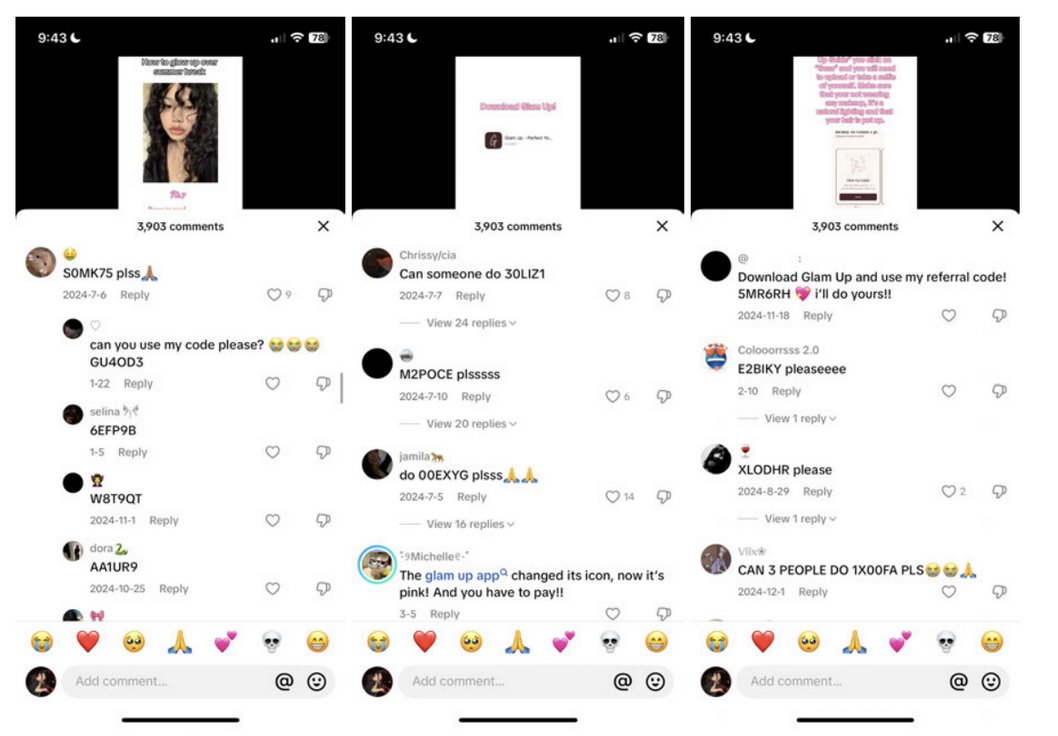
most apps go viral at the wrong time
the WORST possible outcome for an app is going viral before the funnel works.
50,000+ people download your app. your onboarding is clunky. there's no emotional payoff before the paywall. the paywall hits too early. conversion is 0.3%. you make $800. the ALGORITHM moves on. that moment never comes back.

so before any of the things in this article matters, your onboarding has to convert. not perfectly, but well enough that when TRAFFIC hits, a real percentage of it turns into revenue.
the best onboarding flows share the same architecture. they eliminate FRICTION at entry (without a login/e-mail screen,nothing between the user and the product). they ask 8 to 12 questions that feel personal even if the backend doesn't use them yet, because the act of answering creates investment. they DELAY the paywall until the user has done something irreversible, uploaded a photo, watched a scan animation, seen their results blurred behind a paywall.

the blurred RESULT is one of the most psychologically loaded moments in any consumer app. the user has spent 3 to 4 minutes in the onboarding. they've answered questions about themselves. they've uploaded their face. they've watched an animation process it. they can see there's something on the other side. they just can't access it. that TENSION is where conversion happens, not when you pop a subscription modal on screen 2.
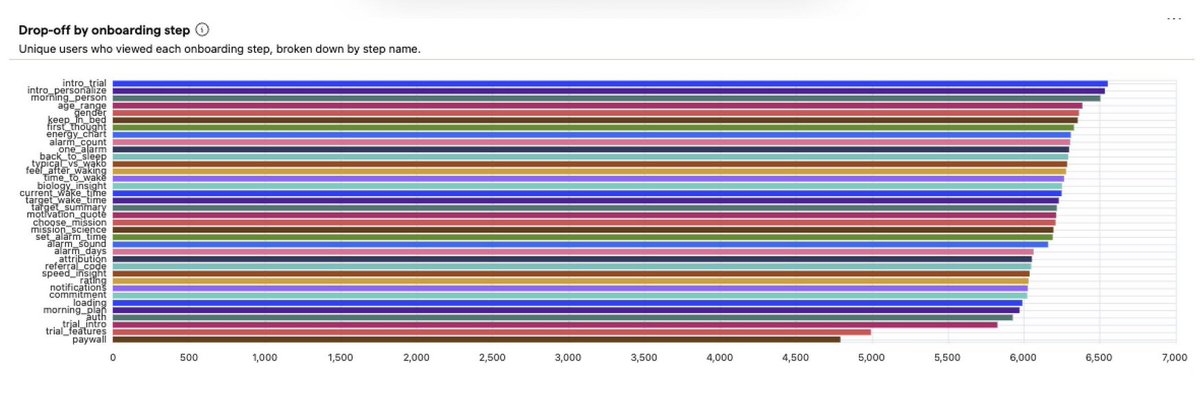
the DATA backs the hard paywall approach. according to revenuecat's 2026 report across 115,000 apps and $16 billion in REVENUE, hard paywalls convert at 10.7% vs 2.1% for freemium by day 35. that's a 5x gap. but the hard paywall only earns that conversion rate when the user already wants the product before they hit it. the sequence is everything.

a second paywall, a closing offer TRIGGERS the moment someone dismisses the first one, is one of the most underused high-leverage moments in most funnels. the user who closed the paywall still showed intent. they saw the price and considered it. they're not gone, they're hesitating. a well-timed discount, 40 to 50% off, framed as something they unlocked by saying no, catches them at exactly the right psychological moment. anchoring made the original price feel real. loss aversion kicks in when the deal appears. one app runs a roulette wheel that shows a 74% DISCOUNT when users close the paywall. conversion on that mechanic alone recovered a significant chunk of near-misses.

on trial length: longer is almost always better than most founders assume. revenuecat data shows trials of 17 to 32 days convert 70% better than trials of 4 days or less. 42.5% vs 25.5%. yet nearly half of all apps still use trials of 4 days or less. that GAP is money sitting on the table every month.
one more thing that almost no one does well: the review prompt. the right placement is mid-onboarding, right after a moment of delight, before any friction. the user just saw something that impressed them. they haven't hit the paywall yet. they haven't struggled with anything. that 10-second window is when they'd give you 5 stars without thinking. one founder placed it there and got 152 ratings at a 4.8 average. the product wasn't better than competitors. the TIMING was.

once your FUNNEL converts, then marketing can compund. not before.
the mistake that kills ugc campaigns before they start
most FOUNDERS who try ugc come back with the same complaint.
the content looks good. the formats should work. every video is stuck at 200 views.
the answer in almost every case is the same: the accounts were NEVER warmed up properly. the founders thought they were. they weren't.
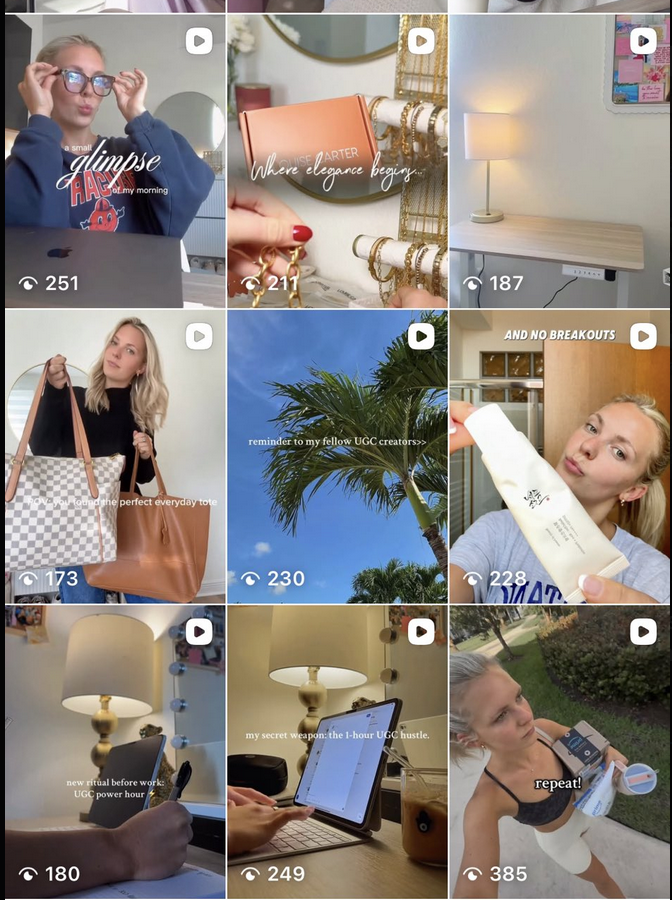
this matters more than almost any other variable in organic distribution. you can have a PROVEN viral format and a talented creator and completely cap performance at 200 views indefinitely if the account wasn't set up correctly. the algorithm decides who sees your content before you post anything. the warm-up period is how you tell it who your audience is.
a warm-up is not following 10 accounts and liking a few videos. it's a 3 to 4 day process of behaving exactly like a real human inside your ideal customer's content ecosystem.
the full warm-up process:
scroll content from your IDEAL customer profile. not randomly. use specific keywords to seed the fyp toward the right demographic. if you're PROMOTING a looksmaxxing app, you want the account consuming content about skincare, glow-ups, before and afters, facial analysis. the ALGORITHM reads your consumption pattern and learns who you are before you've posted anything.

save, like, and comment on content as you go. not on everything. 5% like rate. the algorithm FLAGS accounts that like every video they see. act like a human, not a bot completing a task.
follow 1 to 2 micro-influencers per day, accounts with 5k to 150k followers in the niche. don't follow them all at once. do it naturally as they come up in the feed.
repost 1 to 2 pieces of content per day. mix viral posts with mid-range posts (10k to 100k views). this tells the algorithm what content landscape you belong to.
do this for 3 to 4 days before the first post goes up.
if the process is followed correctly, the first 5 posts on a fresh account should all clear 1,000 views. accounts that can't hit that baseline after the warm-up period are FLAGGED as something, a bot pattern, wrong demographic seeding, too much interaction in bulk. audit the process, not the content.
one RULE that gets ignored constantly: creators on the same campaign should not interact with each other's accounts. if they do, the algorithm surfaces their content to the same audience, eliminating the point of having multiple creators. it also flags the pattern as COORDINATED behavior and can restrict all of the accounts involved.

finding your format before you spend on distribution
the founders who SCALE fastest are not the ones who move first. they're the ones who research first and scale second.
there is a SEQUENCE that works and one that doesn't, that doesn't: hire 10 creators, give them a brief, hope something goes viral. the sequence that works: spend 2 to 4 weeks finding what formats already perform in your niche, test the 3 to 5 strongest ones with a small number of accounts, identify the 1 to 2 that consistently clear 1,000 to 5,000 views on cold accounts, then scale those specific formats.
format research means going deep into COMPETITOR ugc. not scrolling it, studying it. find the videos with 2 million views in your niche. watch them multiple times. what is the hook in the first 2 seconds? what's the length? is there music? what's the text overlay saying? where does the app show up in the video and when? what happens in the last 3 seconds that makes someone want to share it?
then replicate it. not loosely. exactly. same pacing, same length, same music style, same text placement. VIRALITY is engineered from proven patterns, not invented from scratch.
test on 2 to 3 accounts. if the format CONSISTENTLY clears the baseline, that's your signal. that's what you scale.
founders spent one full month on this before touching ugc at any real volume. when they scaled to a 6-person ugc team, those creators were hitting 500,000 views in their first week. not because the creators were unusually talented. because the format was already proven before it got distributed.

what actually works and what doesn't
ugc at scale
the CLOSEST thing to a repeatable machine for app growth. hire creators to build fresh tiktok and instagram accounts, warm them up using the process above, and post 30 to 60 videos per month each.
pay structure that works: $10 to $15 per video as a base, plus performance bonuses. $150 at 100k views. $250 at 250k. $600 at 500k. $1,000 at 1m.
the BONUS structure changes the creator's relationship to the content. they're not clocking out after delivering the video. they have a reason to care whether it performs. the videos that go viral are expensive on paper but they return the investment by orders of magnitude.
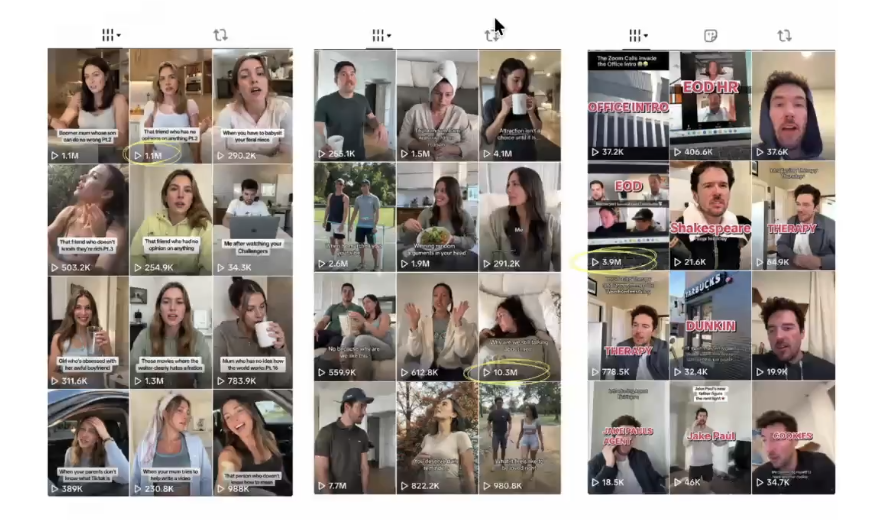
start with 1 to 3 creators while you're still finding the format. test what works. once 1 or 2 formats are consistently clearing the baseline, scale to 10 to 20 creators all running those same formats in parallel.
the common mistake: scaling to 10 creators before the FORMAT is proven. you end up with 10 accounts all posting content that gets 200 views and no way to diagnose whether the problem is the format, the warm-up, or the brief.
minutes ai scaled to over $400k per month through ugc at scale.
faceless content
lower barrier to entry than ugc. just content. looksmaxxing apps like umax hit $100k+ per month with pages posting before/after content and edits with a CTA to their scoring app. the slideshows do most of the work.
the problem with FACELESS on instagram specifically: the pages that accept promotions for low rates are often run by people outside the us, uk, and europe, meaning the audience they pull skews toward regions with lower purchasing power. you might get 500k views on instagram and almost no paying subscribers because the PEOPLE watching are android users in regions where conversion rates are dramatically lower. ios users in high-income markets convert at 3 to 4 times the rate of android users globally.
on tiktok the DYNAMIC is different. the platform is banned in india so faceless accounts there tend to be based in target markets. but they charge more and they're harder to find and work with.
use faceless to test formats early and seed awareness. don't rely on it as your primary distribution layer.
founder-led content
the best channel when you have no budget and the most underrated channel even when you do.
film content yourself. pick up formats that are already performing in your niche and replicate them with precision. same length with pacing and text placement. not a loose version of the format. an exact EXECUTION of it.
the thing nobody says about founder-led content: it makes every other channel work better. when you make 30 to 60 videos yourself, you start developing a feel for what hooks work before you can articulate why. you write better briefs for ugc creators. you give feedback that actually improves the content. you can IDENTIFY a weak video before it gets posted. the channels don't operate in isolation.
push scroll scaled to $100k per month through founder-led content and running those videos as paid ads.
influencer marketing
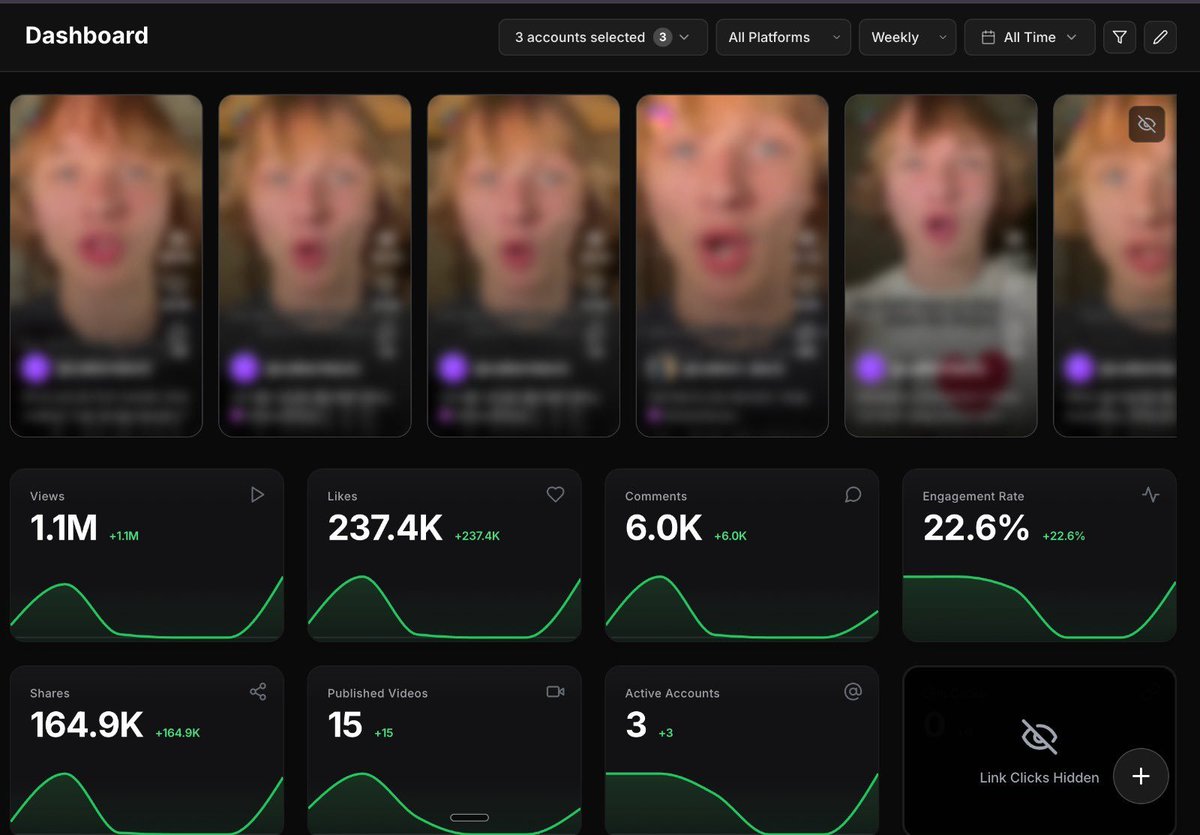
the most OBVIOUS method and the one with the WORST execution rate.
the mechanics that work: find influencers in your niche (not through tools that are dominated by agency-affiliated creators), negotiate $1 to $2 cpm capped at $1,000. the cap protects you from a $10k invoice on a video that UNDERPERFORMS while tying the payout to actual results.
how to find non-agency influencers: filter by personal email domains. gmail and outlook mean you're dealing with the creator directly. agency emails mean 5 to 10x markups and a rep who doesn't actually care whether the content performs.
the outreach volume: dm 100 influencers per day across tiktok and instagram. most won't respond. volume is the only variable you control. your outreach account needs 10k followers or an instagram verified badge ($15 per month) for dms to be visible. without that you're sending messages into a void.
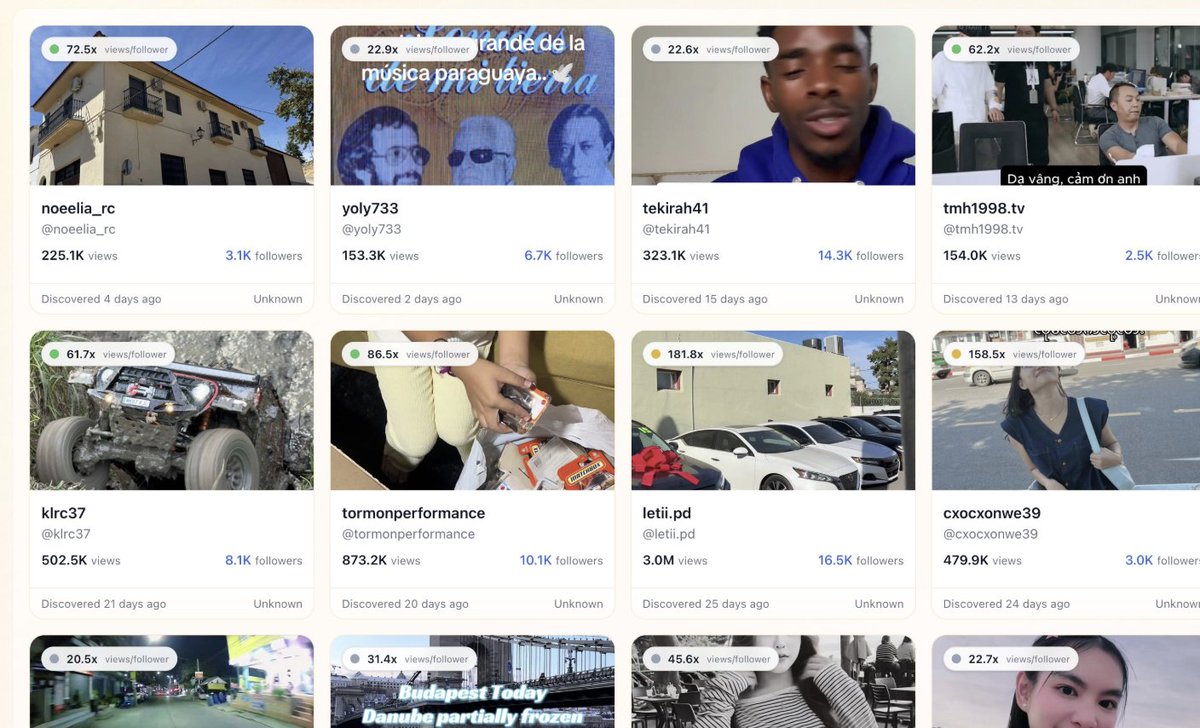
the model that works better than flat-rate but is harder to execute: equity-based partnerships where a creator takes a revenue share and posts as an ongoing part of their narrative, not a one-off promo. this only works when the creator is genuinely embedded in your product's niche and personally invested in its success. cold outreach doesn't close equity deals. warm relationships do.
paid ads
the most POWERFUL method but only after ORGANIC is proven.
organic content tells you what converts before you spend money amplifying it. a video that went viral organically has a very high probability of performing as a paid ad. a video made specifically for ads with no organic validation is a guess, and a guess that costs money every day it runs.
once you find a profitable cpa, increase budget by 25% per week. that's the scaling pace that sustains momentum without burning out the campaign.
what paid ads do that nothing else does: they create a baseline. organic months swing hard. a good organic month might be $80k. a bad one might be $20k. paid ads hold you above a floor while the organic engine runs. without that floor the business feels unpredictable even when it's working.
starting budget: $50 to $100 per day. more creatives in faster, let the algorithm decide what it wants to run. the creative testing phase is more important than the budget level.
the most consistently UNDERESTIMATED channel for app founders. traffic from reddit doesn't look like much in an analytics dashboard but it converts at a rate that almost nothing else touches because the users arriving are actively searching for a solution to a problem your app solves.
the play: join subreddits in your niche, contribute real value for 2 to 3 weeks before mentioning your app anywhere. build karma. be a real member. then start dropping value posts that naturally mention the product and answering questions where your app is the honest answer.
r/sideproject, r/entrepreneur, r/internetisbeautiful, and any niche-specific sub for your vertical are all viable. search "best app for x" inside reddit and you'll find dozens of active threads waiting for exactly the answer your app provides.
the failure mode: posting a link on day one and getting banned within 48 hours. reddit communities are extremely sensitive to promotional behavior. the only way to operate here is to actually give before you take.
partnerships

equity-based distribution rather than flat-rate. instead of paying a creator per video, offer 20 to 50% revenue share in exchange for them becoming a genuine stakeholder in the app's growth. they post consistently, they represent the brand, they have real incentive to drive conversions.
the variable that DETERMINES whether this works or destroys momentum: who you pick. the wrong partner, one who doesn't deeply align with your product or who has an audience that doesn't match your customer profile, can actively harm the brand while consuming equity. interview multiple options. take calls. look at their track record with previous partnerships. the alignment check is not optional.
the content formula behind millions of views
the most consistent INSIGHT across every app that scaled through organic content is that the content itself was simpler than it looked.
the formula works because it doesn't look like an ad. when content is STRUCTURED so the viewer is watching something genuinely interesting or relatable, and the product appears as part of that payoff rather than the main focus, the algorithm treats it like organic content. it doesn't suppress it. the product gets DISTRIBUTED to everyone who watches.

the specific variables that shift performance significantly:
before/after contrast. the higher the contrast between the before and the after, the higher the share rate. the glam up team intentionally chose unflattering before images and maximized the glow in the after. not subtle, exaggerated.
emoji selection. specific emojis consistently outperform others in the same niche. this sounds trivial and has a measurable effect.
hook text placement. small hooks positioned to the side of the frame with very specific language outperform centered, generic hooks. "never saw myself with the right makeup routine" outperforms "glow up guide" every time.
caption phrasing. "i would be unstoppable" outperformed variations like "the glow up i deserve" in testing. these are not equivalent. test both.
posting time. 6 to 10pm local time in the target market consistently outperforms morning and afternoon posting.
trending audio. more founders underweight this than any other variable. the algorithm surfaces content with trending sounds to a much larger initial audience. the audio is not background noise. it's distribution infrastructure.
demographic diversity in VISUALS. this one surprised the glam up founders too. testing showed different audience segments responding to different visual presentations of models in before/after content. knowing which combinations performed best for which audiences let them optimize each creator's content for maximum reach.
scaling distribution
once you have proven VIRAL formats, the bottleneck becomes distribution. getting those formats in front of enough creators to run them at scale, across multiple platforms simultaneously, without spending all day managing relationships and tracking submissions and processing payments manually.

performance-based creator distribution solves that bottleneck.
one consumer app came in already having done the format research. they knew what content worked. they had validated it on their own accounts. they needed infrastructure to take it from 10 creators to tens of thousands.
the results across the campaign: 38,882 total submissions. 24,773 approved clips. 596 million views. $162,805 in total creator payouts. $700,000 in revenue generated.
the math that makes the model work differently from every other paid channel: the payout cap per creator. they set a maximum of $500 to $600 per creator per video. at a base cpm of $0.32, a creator hits their $600 cap at around 1.875 million views. every view beyond that point costs the brand nothing.
but the distribution network was only half of why this worked. the brand built a complete creator operating system around it.
formal creator agreements with CONFIDENTIALITY clauses before any creator saw campaign materials. this filtered out low-effort creators immediately and protected the format from being copied by competitors. most brands skip this entirely.
an influencer version of the app built as a separate web tool. creators could log in, generate personalized overlays and visualizations of the app, and download them for use directly in their content. no editing skills required. this is what separated them from every other campaign in the ecosystem.
a leaderboard bonus on top of the cpm. top creators were rewarded based on actual app downloads tracked through link-in-bio, not just views. this created a second incentive layer that drove reach and conversion simultaneously.
the scaling timeline: january and february were small test campaigns at $1k to $5k, validating which formats worked in the creator ecosystem. march was the first large campaigns going live. april was the spike month, peak days hitting 28 million views in 24 hours. may sustained at 15 to 22 million views per day.
what actually separates apps that scale from apps that plateau

it's not the marketing channel. it's not the content quality. it's not even the format.
it's WHETHER the brand treats creator onboarding as a product or as an afterthought.
every app that SCALES to hundreds of millions of views has a system behind it. creator agreements that filter out low-effort participants. content banks that get updated weekly so creators always have fresh material. warm-up playbooks that get audited and verified. bonus structures that align creator behavior with business OUTCOMES. multi-platform distribution running simultaneously so the same format compounds across tiktok, instagram, and youtube at once.
the brands that PLATEAU hand a creator a brief and hope for the best. they run one platform. they don't update the content bank. they don't verify warm-up. they have no secondary incentive layer. every campaign starts from zero because nothing was built to compound.
MOMENTUM is the only thing that changes the economics of creator marketing. and it only comes from systems that were built before you needed them.
if you're an app/brand and you want to run a CAMPAIGN at scale, DM me. we'll look at your existing formats, build out the infrastructure, and launch something that actually works.
Related articles
The ULTIMATE Organic Marketing Guide for App Founders...
the founders doing $100k to $400k mrr on organic are not smarter than you, they are just running a system thats working, which is NOT outdated.

$100k MRR and 25M Push-Ups with a mobile app (Complete Guide)
Over the course of roughly 12 months Mario (@null_deref ) and me scaled our app Pushscroll to $100k+ MRR and 1M+ Users across Android and iOS.

I scaled My App to 15K/Month in 2 Months (FULL GUIDE)
My apps made 18K this month at 18 years old....