How to Become an AI Engineer in 2026
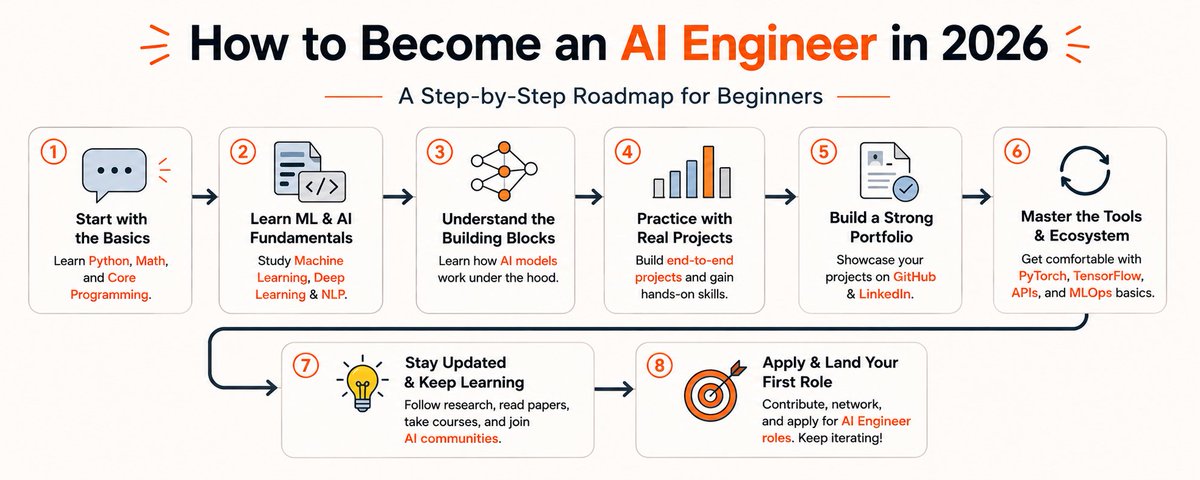
A practical, no-fluff guide to becoming an AI Engineer in 2026 — including the skills, tools, projects, and mindset that actually matter.
Every few months, someone asks me the same question:
“How do I become an AI Engineer?”
Most people expect a simple answer — learn Python, study machine learning, build a few projects, and apply for jobs. That path worked in 2023 and 2024. In 2026, it is no longer enough.
The role of an AI Engineer has changed significantly. Companies are no longer just looking for people who can train models. They want engineers who can build reliable, scalable, and production-ready AI systems that actually deliver business value.
This means you need to understand not just models, but also:
How to connect AI to real business systems
How to manage data, memory, and context effectively
How to build agents and multi-agent workflows
How to monitor, debug, and govern AI in production
How to work with existing engineering teams and infrastructure
In short, the bar has gone up.
If you want to become an AI Engineer in 2026, you need a clear, updated roadmap. This article gives you exactly that — a realistic, step-by-step guide based on what companies are actually hiring for right now.
What Does an AI Engineer Actually Do in 2026?
The role of an AI Engineer has evolved beyond just building models.
In 2026, an AI Engineer is responsible for designing, building, and maintaining AI systems that work reliably in real-world environments. This includes:
Building and deploying machine learning models into production
Creating and managing AI agents and multi-agent workflows
Integrating AI into existing software systems and databases
Handling data pipelines, feature stores, and retrieval systems (RAG)
Implementing memory, context management, and tool use
Monitoring AI performance and fixing issues in production
Ensuring AI systems follow governance, security, and compliance rules
Collaborating with data scientists, software engineers, and business teams
In many companies, AI Engineers sit between Data Scientists and Software Engineers. They take research work and turn it into production-grade systems that can be used by real users.
The role requires both strong technical skills and the ability to understand business needs.
Core Skills Required to Become an AI Engineer
Here’s a breakdown of the skills companies are looking for in 2026:
This table shows that technical skills alone are not enough. You also need strong engineering practices and the ability to work with modern AI tools and teams.
Step-by-Step Learning Path (2026)
Here’s a realistic learning path broken into four phases:
Phase 1: Foundations (1–2 Months)
Focus on building strong fundamentals:
Master Python (especially data structures, OOP, and libraries like Pandas & NumPy)
Learn SQL and basic data analysis
Understand core Machine Learning concepts (regression, classification, clustering, evaluation metrics)
Practice on platforms like Kaggle, LeetCode, or HackerRank
Learn basic statistics and probability
Goal: Build strong programming and ML fundamentals so you can understand how models actually work.
Phase 2: Modern AI Skills (2–3 Months)
This is where most people need to focus in 2026:
Learn how to work with Large Language Models (OpenAI, Claude, Llama, etc.)
Master RAG (Retrieval-Augmented Generation) — this is critical
Understand agents, tool use, and function calling
Learn at least one agent framework (CrewAI or LangGraph recommended)
Practice building simple AI applications that use tools and memory
Goal: Move from traditional ML to modern LLM-based systems.
Phase 3: Production & Engineering Skills (2–3 Months)
This phase separates good candidates from great ones:
Learn how to deploy models and agents (FastAPI, Docker, cloud platforms)
Understand MLOps basics (model monitoring, logging, versioning, CI/CD)
Learn how to work with vector databases (Pinecone, Weaviate, Chroma)
Practice building end-to-end AI applications that can handle real users
Understand basic security and privacy considerations
Goal: Be able to take an AI idea and turn it into a working, reliable system.
Phase 4: Specialization & Portfolio (Ongoing)
Choose one area to go deeper (Agents, RAG systems, MLOps, Computer Vision, etc.)
Build 3–5 strong, well-documented projects
Contribute to open source or write technical content
Prepare for technical interviews
Build a portfolio that shows real problem-solving ability
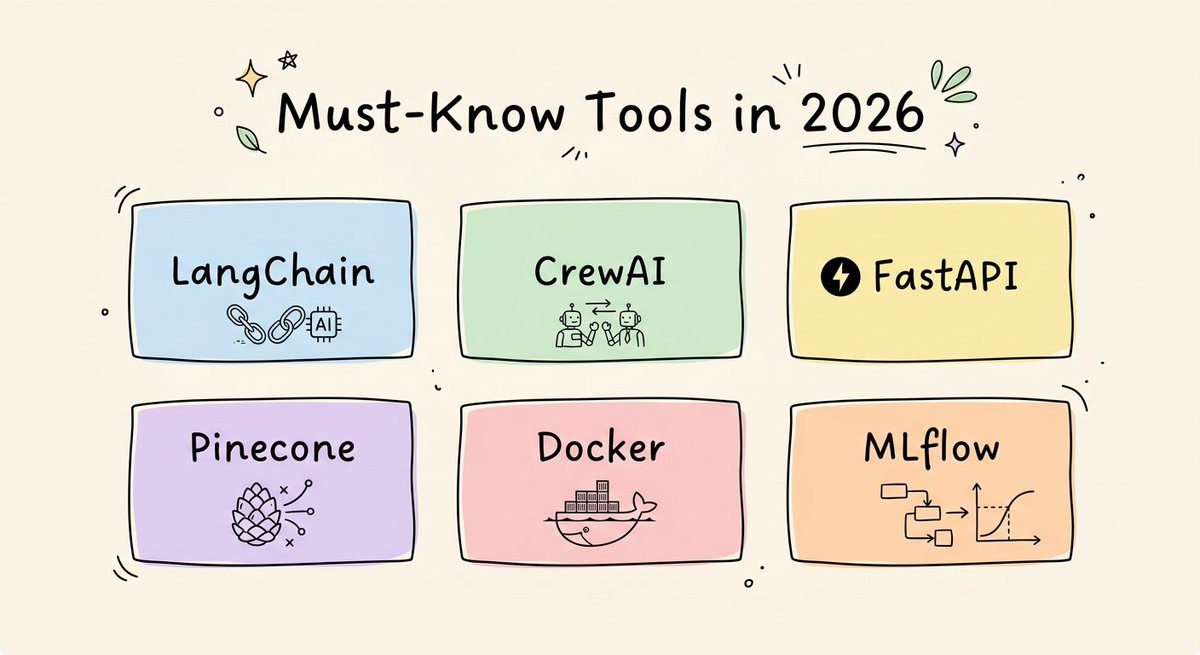
Must-Know Tools & Frameworks in 2026

Here are the tools that matter most right now:
You don’t need to master all of these at once. Start with Python + LangChain + one vector database.
Must-Build Projects for Your Portfolio
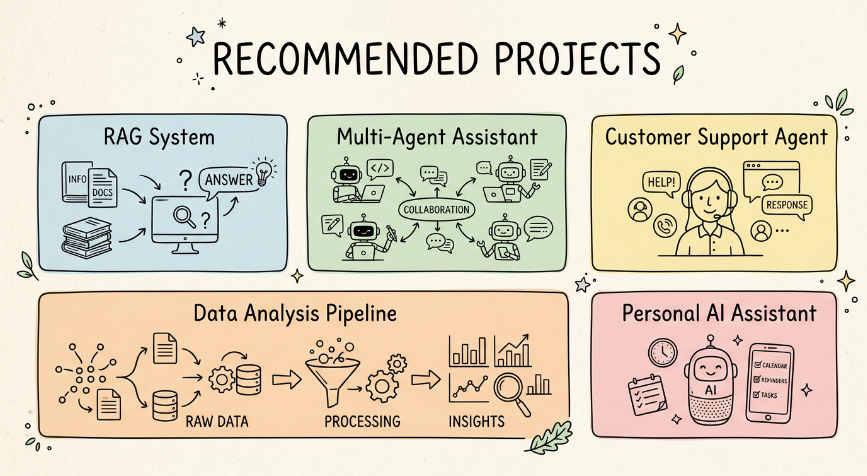
Having strong projects is one of the best ways to stand out. Here are recommended project ideas:
RAG-based Question Answering System — Connect a model to your own documents or company knowledge base.
Multi-Agent Research Assistant — Multiple agents that research, analyze, and summarize topics together.
AI-Powered Customer Support Agent — An agent that can answer support tickets using tools and memory.
Automated Data Analysis Pipeline — An agent that analyzes datasets and generates reports automatically.
Personal AI Assistant — An agent that helps with daily tasks using multiple tools.
For each project, focus on:
Clean code structure and documentation
Proper use of memory, tools, and RAG
Clear explanation of the problem you solved
Deployment (even if simple)
Sample Prompt: Building a Multi-Agent System
Here’s an example of a well-structured prompt for a supervisor agent:
This kind of structured prompt helps multi-agent systems perform much better than vague instructions.
Common Mistakes to Avoid
Many people struggle to become AI Engineers because they make these mistakes:
Focusing only on models and ignoring engineering practices
Building too many small projects instead of a few strong ones

Ignoring deployment, monitoring, and production concerns
Not learning how to work with agents and RAG systems
Applying for jobs too early without enough practical experience
Copying tutorials instead of building original projects
Not documenting their work clearly
Focusing only on theory without building real applications
Avoiding these mistakes can significantly speed up your progress.
Job Market Reality in 2026
The demand for AI Engineers remains high, but expectations have increased.
Companies are looking for people who can:
Build production-ready AI systems
Work with agents and multi-agent workflows
Handle real data and infrastructure challenges
Communicate clearly with both technical and non-technical teams
Understand business problems and translate them into AI solutions
Entry-level roles are competitive. Having strong projects, clear communication, and practical experience with modern tools makes a big difference.
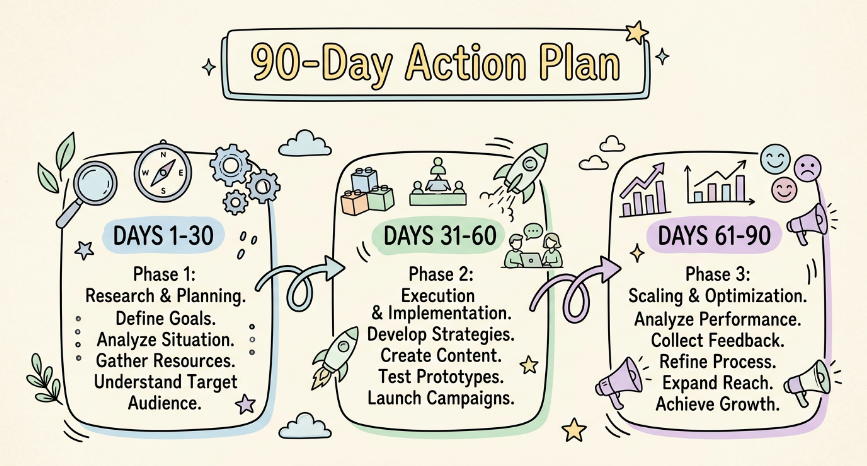
90-Day Action Plan
Here’s a simple 90-day plan to get started:
Days 1–30: Strengthen Python + learn core ML concepts + complete 2 small projects
Days 31–60: Learn LangChain + RAG + build 2 medium projects involving agents
Days 61–90: Learn one agent framework + deploy a project + update resume and portfolio
Consistency matters more than intensity. Even 2 focused hours per day can lead to strong progress in 3 months.
Interview Preparation Tips
When preparing for AI Engineer interviews, focus on:
Explaining your projects clearly (problem, approach, challenges, results)
Understanding how RAG and agents work in practice
Being able to write clean Python code
Explaining trade-offs (speed vs accuracy, cost vs performance, etc.)
Discussing how you would monitor and improve an AI system in production
Many interviews now include practical coding exercises and system design questions related to AI.
Final Thought
Becoming an AI Engineer in 2026 is more achievable than ever — but it requires a broader skill set than before.
You no longer need a PhD, but you do need strong engineering skills, practical experience with modern tools, and the ability to build systems that work in the real world.
The people who succeed are not necessarily the smartest. They are the ones who build consistently, learn from real projects, and keep improving their systems over time.
If you’re willing to put in the work and follow a structured approach, becoming an AI Engineer in 2026 is very much within reach.
If you're learning AI, this might help:
• 1000+ AI prompts
• Practical AI tools
• Automation workflows
• Productivity use cases
• AI resources for work & learning
https://bytebuilders.beehiiv.com/subscribe
Prompts
You are the Supervisor Agent in a multi-agent system.

Your team includes:
- Research Agent
- Writer Agent
- Critic Agent

Your job is to:
1. Break the user’s request into clear steps
2. Assign tasks to the right agent
3. Review outputs and request improvements if needed
4. Deliver the final result only when it meets quality standards

Current task: [User’s request]
Article tables:
| Category | Tool / Framework | Why It Matters |
|---|---|---|
| LLM Frameworks | LangChain, LlamaIndex | Core for building LLM applications |
| Agent Frameworks | CrewAI, LangGraph, AutoGen | Building multi-agent systems |
| Model Serving | FastAPI, vLLM, Ollama | Deploying models efficiently |
| Vector Databases | Pinecone, Weaviate, Chroma | Essential for RAG systems |
| MLOps | MLflow, Weights & Biases | Experiment tracking and monitoring |
| Cloud | AWS, GCP, Azure | Deploying AI systems at scale |
| Data Tools | Pandas, Polars, dbt | Data processing and pipelines |
| Category | Skill | Importance | Notes |
|---|---|---|---|
| Programming | Python | Very High | Must be strong in data structures and OOP |
| Programming | SQL | High | Required for working with databases |
| Machine Learning | Supervised & Unsupervised Learning | High | Core foundation for understanding models |
| Machine Learning | Deep Learning (PyTorch/TensorFlow) | Medium | Useful but not always mandatory |
| LLM & Agents | Prompt Engineering & RAG | Very High | Critical skill in 2026 |
| LLM & Agents | Multi-Agent Systems & Frameworks | High | Growing rapidly in demand |
| Data Engineering | Data Pipelines & Feature Stores | High | Very important for production systems |
| Software Engineering | APIs, Docker, Cloud Basics | High | Needed for deploying AI systems |
| MLOps | Model Deployment & Monitoring | High | Essential for production AI |
| Soft Skills | Problem Solving & Communication | High | Often overlooked but very important |
Links
Related articles

8 SEO Link-Building Tactics Automated With Claude
📢 If you want more high-quality backlinks but

I Brutally Modified My Front-End Design Skill ~ Now My UIs Don’t Look Like AI Crap
To create a custom Claude skill, navigate to Customize > Skills in your Claude interface, click the + button, and select + Create skill

Building an AI Architecture Studio With Claude Code
This is 100% AI-augmented and does not require an architecture license in most jurisdictions when delivered as design consultation rather than stamped documents.